Spirit-Lifting Thoughts For Every Day of the Year

Category: Uncategorized (Page 50 of 50)

Diet Sodas—Good For Your Diet?

Lots of people consume diet sodas these days and feel that they’re doing the right thing for their body by doing so. After all, there’s no nasty high-calorie sugar or high fructose corn syrup to cause weight gain, so how can it be bad? Without going into all the potential hazards of consuming aspartame or sucralose (the two most common man-made artificial sweeteners used in diet soft drinks), I’d like to cover a few aspects of what diet sodas can do to our bodies.

WEIGHT GAIN FROM DIET SODA?
The following information comes from a 2018 article from Prevention.com.

While diet soda has been linked to obesity in the past, a new study focused on where daily drinkers gained extra fat: in widening waistlines. Researchers also suggest a range of possible reasons for how diet sodas might increase risk, beyond just increasing hunger hormones (the most commonly held assumption).

To reach their conclusion, researchers measured diet soda intake, waist circumference, height, and weight of 466 adults at study onset and at three follow-ups. The result: the increase in waist circumference among daily diet soda drinkers was more than triple that of non-drinkers. Why that’s so scary: greater belly fat has been linked to a greater risk of metabolic syndrome—a combo of risk factors that may lead to high blood pressure, diabetes, heart disease, and stroke.

There are a few potential reasons diet soda could pack on belly fat, researchers say, including the sodas’ acidity from the phosphoric acid used in both regular and diet soda to lend a tangy flavor and act as a preservative. “Constantly ingesting this might create an even more acidic environment in your gut than normal, which may affect biodiversity and allow some harmful strains of bacteria to thrive,” says lead study author Sharon Fowler. A large French study found an increased risk of diabetes in diet soda drinkers, and among people with more acid-forming diets.

Artificial sweeteners also may play a big role, and there are a few ways in which they may exert their negative effects, says Fowler. First, artificial sweeteners may cause changes to gut bacteria, leading to the overgrowth of strains that are more efficient at getting every last calorie out of the food you eat. Second, they may mess with our ability to metabolize glucose, which can lead to insulin resistance, which in turn increases hunger. And third, there’s some speculation that they mess with us neurologically, interfering with our body’s signals to quit eating.

Because the belly-expanding effects of these drinks were found at such low levels—just one diet soda drink per day—it may be best to ditch the habit altogether. If you still crave that refreshing fizz, try transitioning to something like a zero-calorie seltzer (there are even naturally flavored caffeinated varieties) or naturally effervescent kombucha tea.

This image highlights some other things that diet drinks can do to our bodies.
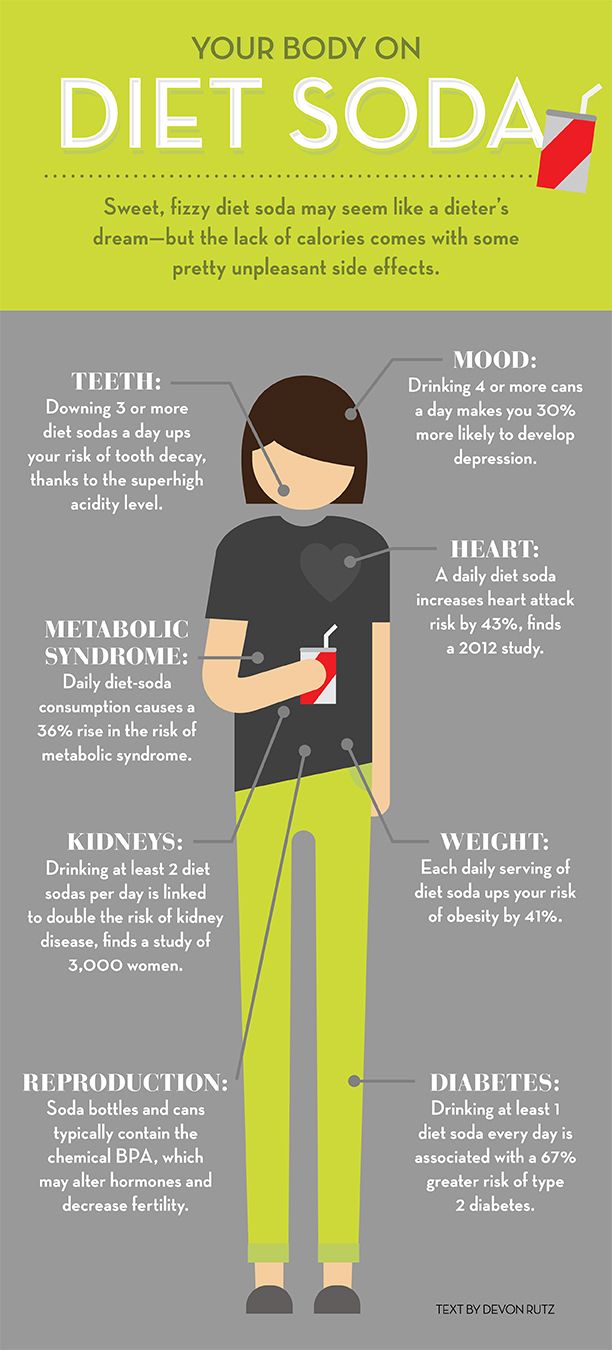
And here are even more health concerns connected with diet soda consumption, that I learned from Inc.com.

1. It makes our bodies produce insulin.
Insulin, secreted by the pancreas, is how the human body stores sugar. When the taste of artificial sweeteners (in soda, yogurt, or anything else) hits your brain, it automatically sends a signal to your pancreas to begin producing insulin. Insulin is what tells our cells to either use sugar as food or store it as fat–without it, our bodies can’t process the sugar that lands in our bloodstreams. When your pancreas produces insulin to deal with anticipated sugar, but then no sugar arrives, it confuses your body and disrupts its metabolic process. This may explain why several studies have shown a link between regularly drinking diet soda and metabolic syndrome, a collection of symptoms that includes larger waist circumference, higher blood pressure, and higher blood sugar.

2. It conditions our taste buds for sweetness.
You probably know or have observed that the more regularly you taste something (sweetness, saltiness, etc.) the more inured to it you become. This is why people who stop eating sugar or salt suddenly find many commercially available foods extremely salty (potato chips, for instance) or extremely sweet (candy bars).

So it’s worth considering that artificial sweeteners are dramatically sweeter than sugar, and although it may not register that way on your tongue, diet soda is in fact much sweeter than regular soda. All that sweetness accompanied by zero calories confuses your brain as well as your metabolic processes, and tends to leave you craving sugar more than before.

3. It makes you feel entitled to eat more.
Counting calories is still the most common method people use to try to lose weight, and it’s the basic principle behind both Weight Watchers and the popular weight-loss app Lose It! If you’re counting calories, there’s a simple equation: Drinking a regular soda means you have to eat 140 calories less of something else that day or that meal. Drinking a diet soda means you’ve consumed zero calories, so you get a free pass to eat more. But since drinking the diet soda has fooled your body into expecting sugar, it’s changed the way you metabolize those other calories–you may store more of them as fat and use fewer of them as energy–which could leave you hungry and wanting even more food.

If all of the above isn’t enough to make you avoid the stuff, then consider that other studies also show drinking diet soda is associated with increased risk of stroke and Alzheimer’s disease. (Drinking regular soda seems to be bad for the brain as well.)

I don’t know about you, but I’m sticking to water, unflavored seltzer, coffee, tea, and the occasional beer or red wine. Soda, both regular and even diet, can be sweet, bubbly, and yummy. But it just isn’t worth the risk.

Here’s a video that shows six health risks that can come from drinking diet sodas.


I’ve never cared for diet soft drinks, but I did drink low-calorie (artificially sweetened) fizzy fruit drinks for a time, until I learned about the possible health risks of ingesting the chemical sweeteners they use. Now I only drink bottled water, sparkling water, V8 and diluted fruit juice. Honestly, since going Whole Food Plant-Based even straight apple, grape or orange juice is much too sweet for my taste buds. I dilute it 50/50 with water and it tastes just right to me.

In the last part of today’s post I share eight benefits of giving up diet sodas. For more details of each benefit, read the full article on Prevention.com.

1. Your mind seems sharper and migraines go away.
2. Food tastes better.
3. It helps with weight loss.
4. Bones become stronger.
5. Your attitude towards food changes.
6. あなたは酒をよく扱う.
(you’ll need to read the full article here to find out what #6 is. Being a teetotaler I don’t view it as a benefit for myself.)
7. Risk for diabetes and fat storage goes down.
8. Your kidneys function better.
Other WFPB Resources

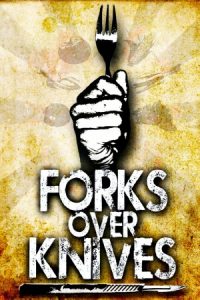
  For those with a Netflix account you can watch one of the best videos ever made on the subject of Whole Food Plant-Based living—’Forks Over Knives’. It came out in 2011 yet is even more relevant today than it was then. Click the link below, log into your Netflix account and watch it. I highly recommend it. https://www.netflix.com/title/70185045

Another great documentary advocating a Whole Food Plant-Based lifestyle is ‘The Game Changers’, presented by James Cameron, Arnold Schwarzenegger and Jackie Chan. It was released in September of 2019 and shows world-class athletes who are totally plant-powered achieving amazing results in their sports. You can watch it on Netflix here: https://www.netflix.com/title/81157840

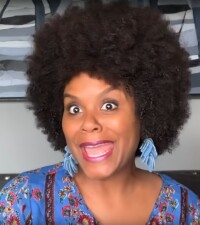
YouTube is a great resource for numerous documentaries and videos that have been made on the positive effects of Whole Food Plant-Based living. You can find them by searching YouTube for ‘Whole Food Plant-Based‘. And one of my favorite people to follow on YouTube is Tabitha Brown, an actress and vegan food influencer. Watch this video of Tabitha explaining why she became a vegan. https://www.youtube.com/watch?v=czzktlf07qw

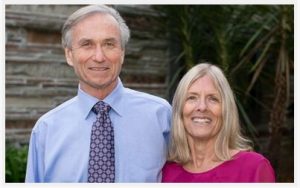
Dr. John McDougall

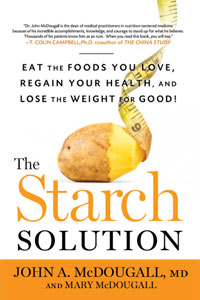
Dr. John McDougall is an American physician and author who is the co-founder, chairman, and sole board member of San Francisco–based Dr. McDougall’s Right Foods Inc. He has written a number of diet books advocating the consumption of low-fat, starchy food. Below are stories of people who have overcome life-threatening diseases by adopting a Whole Food Plant-Based diet. All of them did so by following Dr. McDougall’s books and programs.


• Ruth Heidrich Defeated Breast Cancer and Osteoporosis
Read Ruth’s story here: https://www.drmcdougall.com/ruth-heidrich

• Anneliese Moore Treated Breast Cancer with Diet
Read Anneliese’s story here: https://www.drmcdougall.com/anneliese-moore

• Peggy Fought Ovarian Cancer by Changing to a Starch-Based Diet
Prior to starting her 30-day test of a Whole Food Plant-Based (WFPB) diet, Peggy’s Cancer Antigen 125 (CA-125) marker was at 750 (a normal person with no cancer has a marker in the range of 10-30). On the 30th day of her WFPB diet, her CA-125 marker was at 30.
Watch Peggy tell her story here: https://www.drmcdougall.com/peggy

• Jessica Bowen’s Winning Battle with Breast Cancer
Watch Jessica tell her story here: https://www.drmcdougall.com/jessica-bowen

• Jackie Swoboda cured her debilitating Rheumatoid Arthritis
Watch her share story here: https://www.drmcdougall.com/jackie-swoboda

• Ten Cases of Severe—Mostly Rheumatoid—Arthritis Cured by the McDougall Diet
Read their stories here: https://www.drmcdougall.com/ten-cases-cured-by-the-mcdougall-diet

• Dr. John McDougall discusses Cancer: https://youtu.be/kU16LHTXjrA?t=298

• Due to the current COVID-19 pandemic, Dr. McDougall’s ‘The Starch Solution Course’ is free for anyone to take. Dr. McDougall wants everyone to improve their health and build up their immune system. Sign up for free here.

Dr. Jane Birch, PhD

Jane Birch researched the LDS Word of Wisdom health code to learn what Jesus Christ has told us regarding the food we eat. She compiled her findings into a book which was released in 2013. You can read her story here.
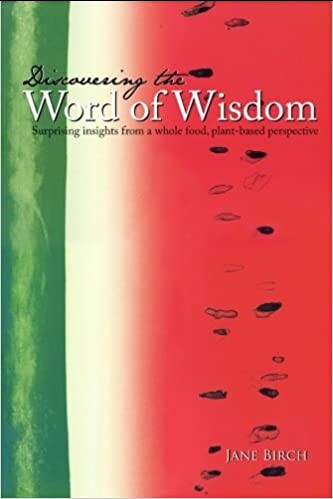
I bought a PDF copy of her book a year ago. The first thing I read once I got my copy were the five pages of praise from people who have embraced her findings, and the wonderful changes they’ve experienced since doing so. And the very first one was from Dr. John McDougall himself, who said this—

“The importance of diet is so fundamental to human survival and success that many of the world’s religions have strongly encouraged their followers to eat a near vegan diet. Dr. Jane Birch has made an important contribution by retelling the truths about nutrition found in the Word of Wisdom in modern day language relevant to the reader.”
—John A. McDougall, MD, author and founder of the McDougall Program

• What the Lord has said about the eating of animals—

Doctrine & Covenants Section 89, verses 12-13
12 Yea, flesh also of beasts and of the fowls of the air, I, the Lord, have ordained for the use of man with thanksgiving; nevertheless they are to be used sparingly;

13 And it is pleasing unto me that they should not be used, only in times of winter, or of cold, or famine.


• Tom Rodgers suffered from multiple health issues including cancer before learning from a conversation with Emma Smith during a Near Death Experience the changes he needed to make to heal his body.
Read Tom’s story here: https://discoveringthewordofwisdom.com/wfpb-story-tom-rodgers/

• Brian Beck had prostate cancer and Type II Diabetes before reading the book The China Study then going Whole Food Plant-Based “cold turkey”, which eliminated all of his illnesses and symptoms.
Read Brian’s story here: https://discoveringthewordofwisdom.com/wfpb-story-brian-beck/

• Randy Campora was diagnosed with Type II Diabetes and esophageal cancer before discovering Jane Birch’s book and website which turned he and his family’s lives around.
Read Randy’s story here: https://discoveringthewordofwisdom.com/wfpb-story-randy-campora/

• LDS Bishop Kevin Tunstall was diagnosed with prostate cancer and while in the New Zealand LDS Temple he was shown in the scriptures exactly what he needed to do to improve his health.
Read Kevin’s story here: https://discoveringthewordofwisdom.com/wfpb-story-kevin-tunstall/

• Tiffany Mortensen battled her weight since she was 13 years old. The hardest part was losing the baby weight after her pregnancies. And even though she ate a healthy diet, nothing seemed to work.
Read Tiffany’s story: https://discoveringthewordofwisdom.com/wfpb-story-tiffany-mortensen/

• Robyn Grow was diagnosed by a rheumatologist with both rheumatoid and osteoarthritis and needed a cane to walk. All the medical experts agreed that she had a problem, but they only offered her drugs.
Read Robyn’s story: https://discoveringthewordofwisdom.com/wfpb-story-robyn-grow/

• You can buy a PDF ebook copy of Jane Birch’s amazing book here for $3.99. I highly recommend her book to anyone wanting to understand what the Word of Wisdom has to say about living a truly healthy life.

Getting Off My MEDS

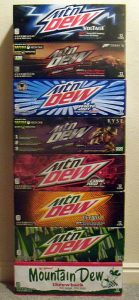
As I said in my previous post I began my Whole Food Plant-Based journey on Valentine’s Day of 2019. I now tell people that’s the day I stopped taking my MEDSMeat, Eggs, Dairy and Sweeteners (refined sugar, honey, saccharine, aspartame and sucralose). I’ll say right up front that before that day I ate nothing even remotely close to healthy. About seven years before becoming plant-powered I had a major soda addiction. My two preferred beverages were Dr. Pepper and Mountain Dew. And as Mountain Dew released more flavors I’d buy and consume them. Here’s a photo I posted on Facebook in October of 2013, bragging about all the different flavors I’d snagged from a local supermarket during a great sale they were having.

Three to four cans a day were common practice back in those days—some days I’d drink even more. And then about four months later I decided to give up soda completely. One day in early 2014 I went cold turkey from Mountain Dew and Dr. Pepper and haven’t had the urge to drink them since. Bottled water and sparkling water are my preferred beverages nowadays. But sadly my consumption of fast food, junk food and bad food in general continued for five more years. I’ve experienced two serious health problems over the years that in looking back now I’m pretty sure were related to my less-than-stellar diet. Both required medical intervention and multiple tests. One test even required a tube of a radioactive isotope to be injected into the jugular vein in my neck and the tube was taped to my neck as it slowly dripped into my bloodstream—not a fun thing at all.

In my quest to become healthier I have to give credit to two people whose work has helped me greatly. The first is Dr. Jane Birch, PhD. As a fellow member of The Church of Jesus Christ of Latter-Day Saints (aka the Mormon Church), she wanted to find out what the scriptures had to say about our health and what things we should and should not be eating to keep the mortal tabernacles of our eternal souls healthy. And the other person is Dr. John McDougall, MD. His website—with its books, courses, recipes and testimonials—has been invaluable to me and many others in knowing the right things to eat. I’ll be sharing information about both of them in upcoming posts, and will include stories from people who have healed themselves of cancer, diabetes, heart disease, arthritis and other serious health issues by adopting a Whole Food Plant-Based lifestyle.

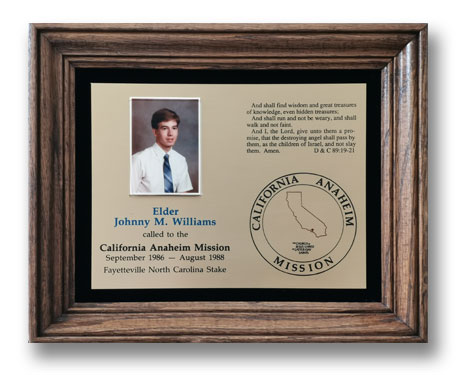
In 1986 I served a two-year mission for The Church Of Jesus Christ of Latter-Day Saints in Anaheim, CA. As is customary for missionaries, a plaque was made to honor my mission. One thing the missionary gets to choose for their plaque is their favorite scripture. After pondering and praying about it I chose Doctrine & Covenants 89:19-21—the promise given by Jesus Christ for those who follow the Word of Wisdom. And now, all these years later, I understand why I chose those verses. I’ve often heard that our prayers aren’t always answered or understood on our timetable, and I’ve learned from firsthand experience that it’s true. Our adopted son taught us that lesson almost twenty years ago when it seemed like we’d never find a child to adopt—then one day, there he was. And last year I learned it again in regards to my diet and health, and that the Word of Wisdom is about far more than what we should NOT put in our bodies.

Above is the plaque I received, and below is the
promise for those who follow the Word of Wisdom

I truly feel that I am following the counsel of Jesus Christ when it comes to my health and the types of things I should be eating, drinking and doing to enjoy a long and healthy life.

Improvements I’ve Experienced

I started my WFPB journey on February 14, 2019 and weighed 190 pounds. On March 25th—just 39 days later—I weighed 170 pounds. I’d lost 20 pounds in less than 40 days! Over the past sixteen months I’ve lost a total of 25 pounds and have kept it off. I’m currently within five pounds of what I weighed during my senior year of high school—which was 36 years ago (back when I was a lean, mean four-eyed nerdy machine!). As of this writing I’m 54 years young, weigh 165 pounds and wear a size 32 waist pants, which I haven’t been able to wear in years.

But my biggest achievement since going WFPB is that I can again perform a feat of dexterity that I haven’t been able to do since my early thirties—climb inside of a clothes dryer and shut the door. This was something I discovered I could do in my mid-twenties while working in the warehouse of a local appliance store and was dared to do one day. But for the past two decades I’ve been unable to do this because of excess weight and stiff/sore joints. Both are now gone. Realize that I’m 6 feet 2 inches tall, wear a size 12 shoe and weighed 165 pounds when I did this on February 10, 2020—which was just 4 days before my one-year anniversary of becoming plant-powered. And the part that amazed even me is that I was able to get in AND back out in less than 30 seconds—and I did so while wearing my fashionable Bob Ross® leisurewear. (Happy Little Trees!) You can watch me perform this outrageous feat below.

[ WARNING: DO NOT try this at home, your local laundromat or
anywhere else! I am a professionally trained dryer climber-inner. ]

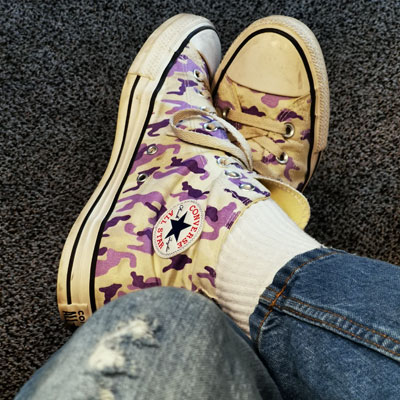
Another thing that has improved since becoming WFPB is my sense of balance. One thing I can do now that I couldn’t even dream of doing before is put on my Converse Chuck Taylor All Star high tops while standing up. I balance on my right foot, put the left shoe on, tie the laces, then switch feet to put the right one on. And I can get them both on in less than thirty seconds. It’s a weird thing to be proud of I know, but I now put my socks and shoes on while standing up. Sneakers and dress shoes were a cinch. But it took a while to work up the courage to try the high tops. Below is a photo of my purple paint-splattered Chuck Taylors. I decided that since I was able to back up my claim of climbing inside a dryer with a video of me doing it, no video would be needed to prove my balancing act.

Welcome To My WFPB Journey

Hello and welcome to my website. For the past 16 months I’ve been living a Whole Food Plant-Based (WFPB) lifestyle. WFPB is similar to a vegan lifestyle in that both refrain from eating any and all animal products—no meat or seafood, no dairy (milk/cheese/butter/ice cream/yogurt/etc.) and no eggs. But the WFPB focus is on eating whole, unprocessed plant-centered foods in addition to avoiding animal products. A person could consume Ruffles, Oreos and Coca~Cola and still be vegan, but not necessarily a healthy one. It’s the added sugar, salt, oil and other chemical additives that can cause problems with our health.

FAT FACT: Just 1 tablespoon (0.5 oz.) of olive oil has almost as many calories (120) as a 12 oz. bottle of Coca~Cola (140). Olive oil and all other cooking oils are 100% fat. And as Dr. John McDougall says—“the fat you eat is the fat you wear.”

For most of my adult life I’ve weighed 160 pounds and never had to watch what I ate. But when I reached my early forties I began gaining weight—an issue I’d never had before. At my heaviest I weighed 200 pounds, which according to the BMI (Body Mass Index) formula put me 5 pounds into the Overweight category for a person of my height (I’m 6’2″).

Back in 2018 I was dealing with severe lower back pain caused by what I now know is Ankylosing Spondylitis (AS), an inflammatory type of arthritis affecting the spine and large joints. My father suffers from the same condition, and we’ve since learned that my eldest son has it as well due to terrible flare-ups of lower back pain he would get for no reason.

During the summer of 2018 we took a family trip to New York City, Washington D.C. and the Carolinas (I was born and raised in North Carolina) and during the entire trip I was in tremendous pain in my lower back. I was rotating between three different types of painkillers, using a TENS unit in an attempt to zap the pain away and wearing a heavy-duty lower back brace the whole time, but nothing seemed to help. Since going WFPB I have not had ONE flare-up in my back, not even after loading and hauling all sorts of heavy stuff to the dump and loading and moving all of our belongings to our new home in August of 2019. I’ve not taken a single pain pill, used a TENS unit or had to wear a back brace for back pain since I became plant-powered. Just a few days ago I was bent over while standing for more than an hour pulling weeds in our new back yard. After I got done I felt fine. Had I attempted that two years earlier I would have been in bed for a whole day afterwards while popping pain pills like candy.

In December of 2019 I was discussing my back improvement with my oldest son (who was 27 at the time and struggling with his own back pain issues) and encouraged him to go WFPB for just one month, starting on January 1st of 2020—the perfect New Year’s Resolution. He did exactly that and saw great improvement in his back pain, so after the first month he continued eating WFPB. And as of this writing he is still pain-free and so happy that he found something to help end his pain at the source, instead of merely dulling the nerves with meds.

I recently asked my son this question: “Were there times prior to going plant-based that you would classify your back pain flare-ups as severe?”
To which he responded: “Absolutely! About the last 6 months of last year I had several where it just kinda put me out for the day. I would lay on the ground in pain, try and take ibuprofen to help get it bearable, take warm showers, try and massage it, anything to help, but nothing really did. It would ease it, but it would typically take about a whole day or two for it to go away.”

Since going Whole Food Plant-Based in January of 2020 my son hasn’t had a single flare-up—of either the mild or severe variety. And having two young children to play with and take care of, becoming free of back pain has been a major blessing in his life.

In the coming weeks and months I’ll be sharing my journey from overweight and unhealthy to slim and full of energy. I’ve learned that what we put into our bodies truly does make a difference in how we feel, look and act. One day a weird thought came to me—I would never dream of putting milk shakes, cheeseburgers and greasy french fries into my Mustang’s gas tank—it would ruin it. So why should consuming those things affect me any differently? And to that weird idea one may say, “Of course you can’t put animal products in a car’s gas tank!” And you’d be right. But we do put plant products in them. Ever heard of Ethanol®? 😊

Newer posts »

© 2026 Johnny M. Williams

Theme by Anders NorenUp ↑